


The basics
- Drive on the left. Seychelles follows UK-style left-hand traffic. If you're from continental Europe, give yourself the first ten minutes to adjust — after the roundabout by the jetty it feels normal.
- Your home licence works. A valid national driving licence is accepted for tourist stays; no international permit needed for most visitors. Carry it whenever you drive.
- Speed limits are low — generally 40 km/h in villages and 65 km/h on open road. Distances are tiny: nowhere on Praslin is more than about 30 minutes from anywhere else, so speed genuinely buys you nothing.
- Seatbelts are mandatory for everyone, and police do check. Drink-driving rules are strict; taxis exist for restaurant nights.
- Minimum age — you must be 18 to drive in Seychelles, but most rental companies ask for 21+ and at least a year or two of licence history.
What the roads are like
The coastal road between Grand Anse and Anse Volbert (Côte d'Or) is tarmac and in decent shape, but narrow — often without a centre line, sometimes without a shoulder, with rain gullies right at the edge. Key habits:
- Slow down and keep left through blind bends; locals know the road and move quicker than you will.
- Watch for pedestrians and cyclists sharing the tarmac — footpaths are rare outside villages.
- The cross-island hill road (Grand Anse ↔ Baie Ste Anne) is steep and twisty but short; use low gear downhill in rain.
After heavy rain, expect small washouts and standing water at the road edge. Tropical showers pass fast — if visibility drops, just pull over for ten minutes.
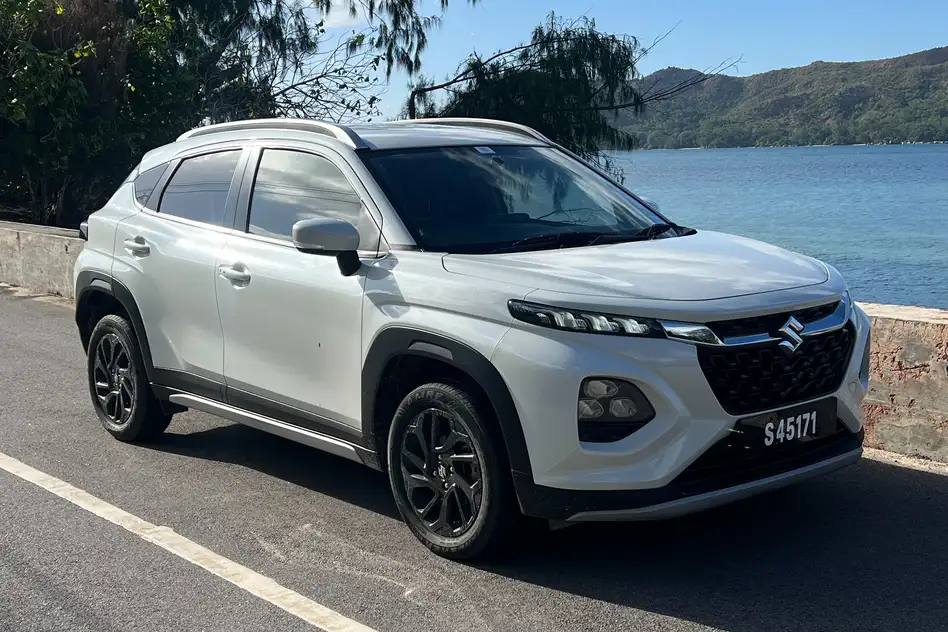
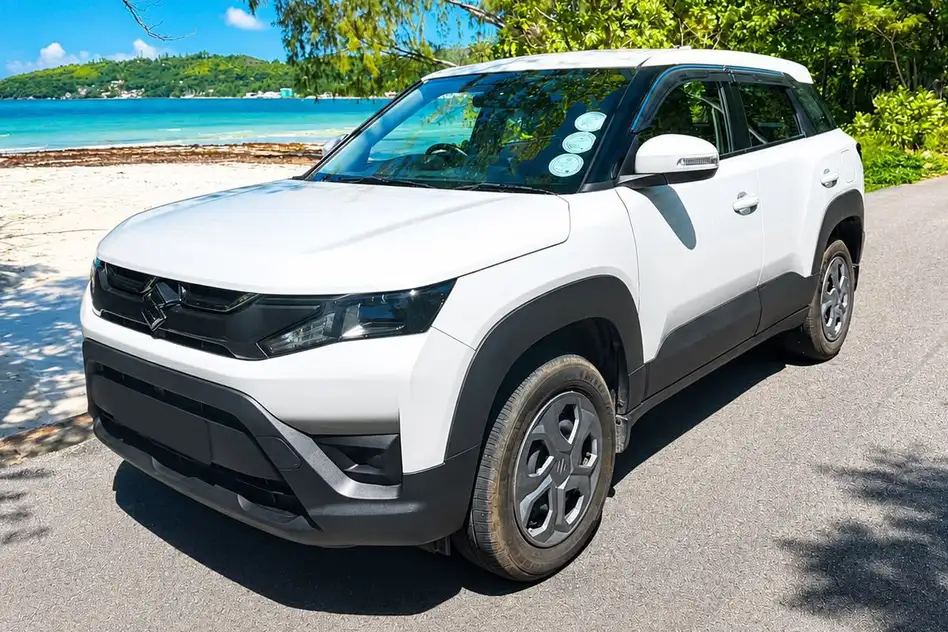
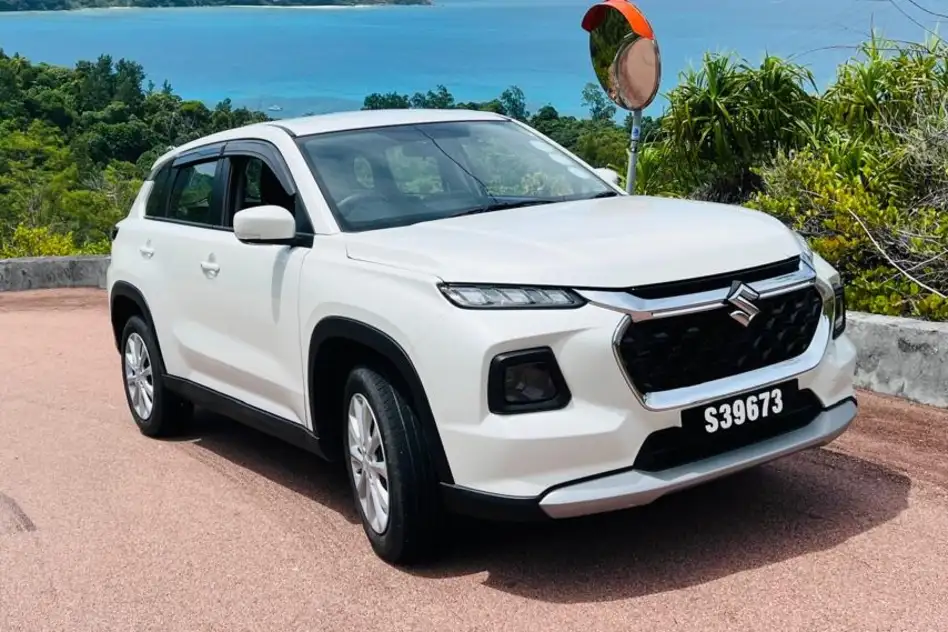
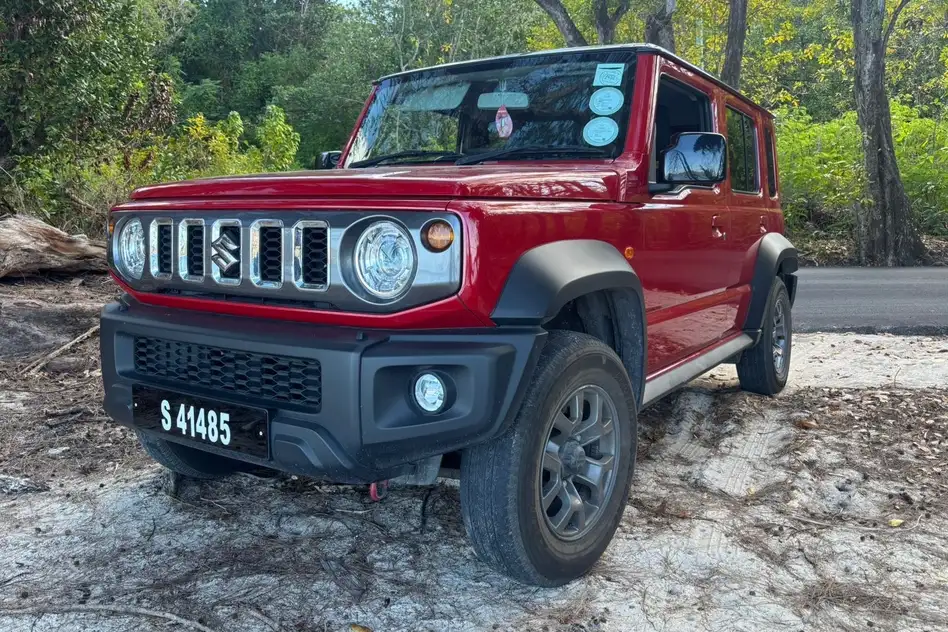
A small SUV or a Jimny-class 4x4 is popular here not for off-roading but for the clearance and visibility on narrow edges — see what's available for your dates.
Fuel
There are only a couple of fuel stations on the island — at Baie Ste Anne and near Grand Anse — and they keep daytime hours. The tank rule of thumb: fill up when you pass one, don't plan around them. A full tank covers several days of normal island driving; fuel is priced per litre similarly to Mahé.
Parking
Parking is one of Praslin's quiet pleasures: free almost everywhere and mostly easy. The exception is Anse Lazio, where the car park costs about SCR 100.
- Anse Volbert / Côte d'Or — roadside bays along the beach strip; mornings are easy, midday can take a lap.
- Anse Lazio — a proper car park behind the beach, about SCR 100 (arrive before 10:00 in season — details in our beaches-by-car guide).
- Vallée de Mai — dedicated car park at the entrance.
- Baie Ste Anne jetty — parking area by the ferry, handy for the La Digue day trip.
Don't leave valuables visible in the car at beach car parks — the islands are safe by any standard, but opportunism exists everywhere on Earth.
Night driving
Street lighting is limited to the villages, and the road edge is unforgiving in the dark. It's not dangerous — just drive slower than feels necessary, use high beams considerately, and allow double time for the hill road.
The bottom line
Driving on Praslin is easy, slow-paced and genuinely enjoyable — the coastal road at golden hour is a highlight of the trip, not a chore. Rent something small, skip the deposit, and treat the 40 km/h limit as what it is: island time, enforced.
FAQ
Is driving on Praslin difficult?
No — traffic is light and distances are short. The two adjustments are driving on the left and narrow roads without shoulders. Most visitors feel comfortable within the first half hour.
Do I need a 4x4 on Praslin?
Not strictly — all beaches and sights are reachable on tarmac. Small SUVs are popular for the extra clearance on narrow road edges and rain gullies, not for off-road driving.
Where are the fuel stations on Praslin?
At Baie Ste Anne and near Grand Anse. Refill whenever you pass one rather than planning around opening hours.
Can I drive on Praslin with my home licence?
Yes — a valid national licence is accepted for tourist stays. Rental companies typically ask drivers to be 21 or older.